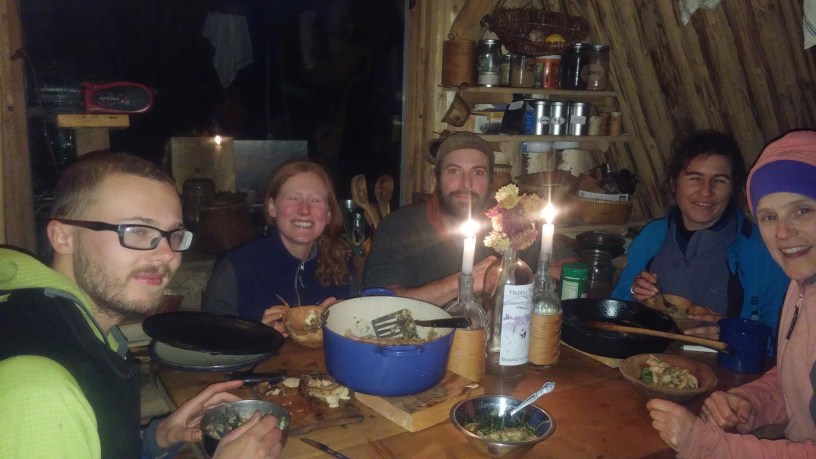
What does it mean to “live off the land”? This term gets tossed around a lot. In my case, it means eating a mostly traditional native diet (with the addition of spices and flavorings for the modern palate) and working hard each day with resources from the land to get life needs met. I will say the 5 weeks I spent on the Tanana have been the closest I’ve been to my food chain, for the longest length of time. It was amazing and as I have stepped away from that lifestyle for a while, I’ve been marinating on the impact on me and my values.
Let me start with food. We’ve been berry picking. We picked 10+ gallons of cranberries in 2 days! This is professional level picking. When we headed out Jenna said “be prepared to pick for 10 hours if we need to!” We got a small group of women friends together and went to it! Picking cranberries rewarding – when the plants are laden! There are clusters of berries and you slide your fingers down the plant delivering a landslide into your bucket. I was feeling pretty effective! They are a small yet pack a powerful vitamin C punch!


There are 2 types of cranberries: High bush and Low bush. The 10 gallons are low bush – they are close to the ground and similar to the cranberries you might have at Thanksgiving, but smaller – much smaller. The High bush are taller plants and the berry is fleshy with a seed. These make excellent jello! You boil them, then juice them in one of the metal pots with a sieve and a handle. The juice runs through while the skins and seeds are left. These also pack a high vitamin C punch.
There are also rose hips for a treat. In the fall they become soft and sweeter. You suck the “sweet flesh” off and spit out the seeds… or in my case eat them. I figure more fiber!
We collected some Masaru – a tuber that you dig up. It’s really the roots of the plant. You have to soak and skin them. We fry them or put them in soup. They are starchy and similar in flavor to an extremely mild sweet potato. This was more of a novelty than a regular staple in our diet.


And then there is the meat. Living off the land in my case means; if we are going to eat meat – we need to provide the meat. We are mostly eating fish, fish eggs, squirrel, grouse and caribou. All of it harvested and usually consumed the same day except the caribou which is frozen from last year’s hunt. Yes, I said the word hunt. I’ve actually been hunting. For those who don’t know I grew up in a family that hunted and ate venison. At 14, I had my hunting license and while I never really shot anything I was part of many hunts. It felt weird to carry a gun again knowing how much power it has, feeling the steel, cold in my hand… the weight of it matching the heavy weight in my heart each time I shot something. It’s not joyous to kill – it’s humbling. In part I made myself do it because I have long held the belief that if I am going to eat meat, I need to be willing to be part of the process, regardless of my discomfort. (and it can be uncomfortable!!)
I would say the most unexpected cuisine was squirrel. When one is starting out hunting they are an easy target. We eat everything we shoot, so squirrel dinner it was! I’ve had them roasted, in squirrel soup, sauted with garlic, onion and mushroom. (Insert Forest Gump shrimp spiel but change to squirrel ) They are actually quite tasty. Is it like chicken you ask? The meat is fairly sweet, perhaps like dark meat, but a bit sweeter. It was a little disturbing to eat them while still in “squirrel shape” – but Alex, one of the guys living out on the land with us is really into primitive living. He is our main source of squirrel meat and he leaves them whole. Talk about uncomfortable! I figure it is a good challenge for me. It is a reminder not to forget where the food comes from or to take it for granted.


This experience has left me with a mixed bag of emotions on my food choices. Walking into a store and purchasing meat is REALLY DIFFERENT than having to shoot it. I can feel good about eating wild game. I know these animals were living healthy, natural lives up to the moment they died, but I don’t enjoy hunting. There is no thrill in shooting an animal. In fact, it leaves me heavy hearted though I choose to do it to eat out here. I have gained more respect for hunter/gatherer cultures. It’s work. It is raw – to skin and eviscerate an animal takes focus. I am convinced if we all had to kill what we ate a lot of our diets would be pretty different. Jenna and David (and many of their friends) eat only from the meat and fish they harvest each year. They buy vegetables, butter, cheese, cream and eggs at the store to supplement, but a huge portion of their diet comes directly from the land. It’s pretty amazing.
Not only do we eat whatever we harvest – we also eat ALL of it. I’ve been introduced to hearts, livers, kidneys, gizzards and more. While this sounds potentially un-appetizing if you are not used to consuming these parts – they are delicious (if cooked right) AND they are packed full of nutrients. For example did you know that Burbot Liver has the highest vitamin D levels of any food source? (burbot is a white fish) No wonder I felt so good after that meal!
There is a great book called “Traditional foods are the best Medicine” by Ronald F. Schmid N.D., which has been informing my new food choices. It’s an excellent resource if you are into nutrition. It falls in line with much of the Paleo diet with a focus on the more local, regional and wild.
Native cultures have been living off the land for hundreds of years. Research has been done on traditional native diets and they show up with no cancer, heart disease or obesity – things that plaque our culture. A traditional diet provides higher levels of many vitamins and nutrients than the USDA daily recommendations. (we already know the USDA recs are flawed.) Anyone see or hear the news story on sugar and how there was a lot of payoffs for the researchers to keep their mouths closed about the ills of sugar? I’ll see if I can locate it and post it.
What I walk away with so far from this experience is multi-fold:
- I like being more connected to my food sources and my daily subsistence
- I feel better about my food choices when I am involved in the process
- Living off the land takes time and energy AND is very fulfilling
- While I feel certain I want to have a simpler existence, I am not sure what that means yet
And…. the beauty of it is that I don’t NEED to know right now. This experience is informing me and giving me the opportunity to explore that question.
Warning – a few “graphic” food shots in these photos!
 Mirczak's Magical Year
Awesome post, Heather! Those 5 weeks were an impactful enough experience that I have found myself thinking about them many times… and I’m not the one who experienced them! I love that you’re writing your posts from this year in such a way that we all get to learn alongside you. Thanks for being such an amazing educator.
LikeLike
Thanks so much! Your words mean a lot to me. Glad this stuff is resonating with you. It is fun to share.
LikeLike
That is really an amazing experience. Thanks for giving some insight into what it really means to live off the land. A lot of work, that’s what it means!
Laura
LikeLike