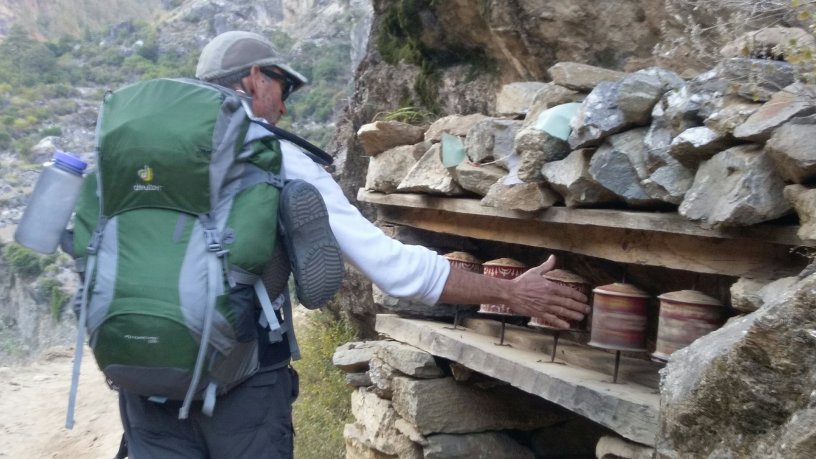
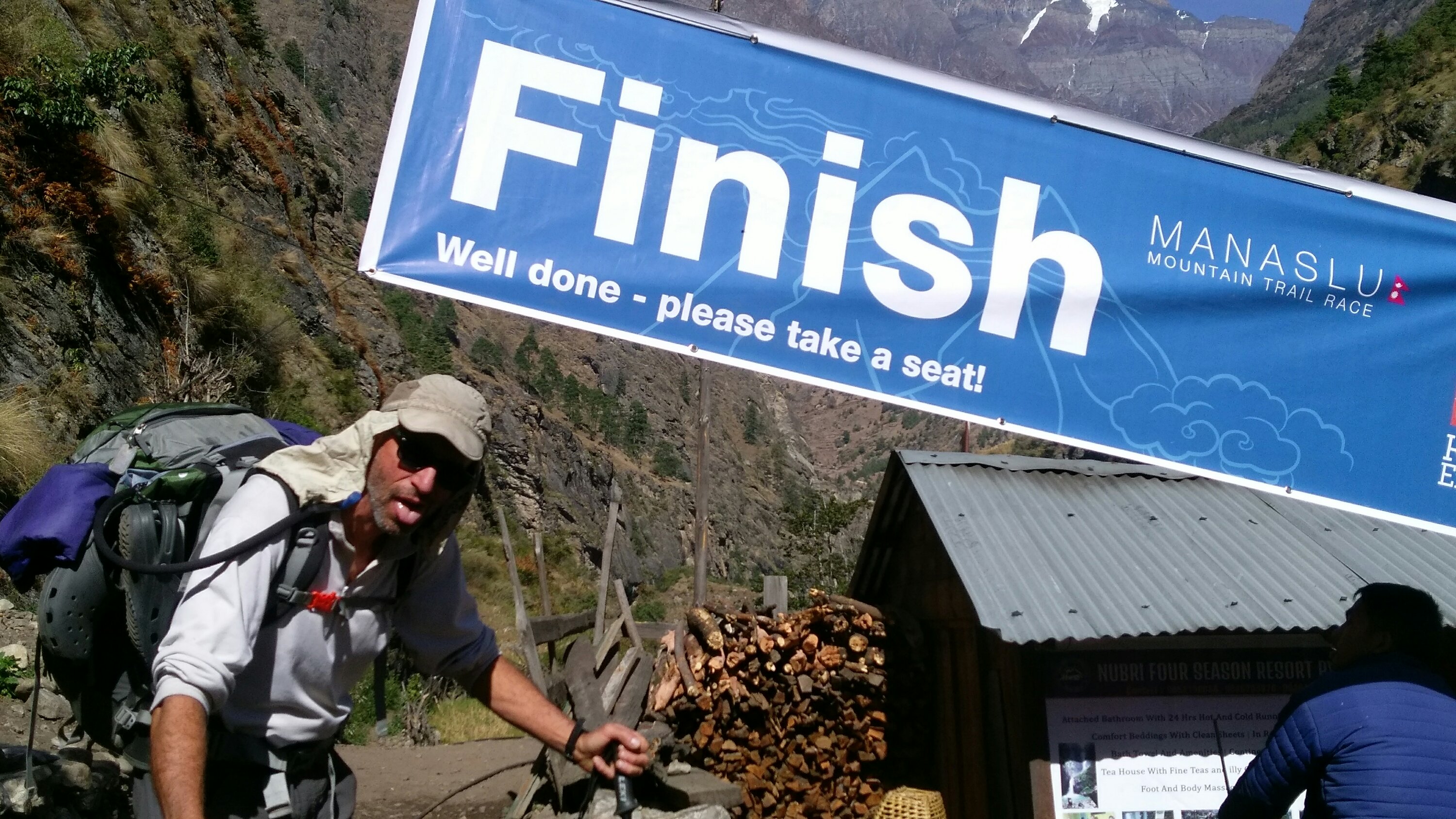
Is not easy. There are harder things I’ve done… (teach high school, lead trad 5.10, support friends through tough times….) which puts it in perspective, but still doesn’t make Nepal easy.
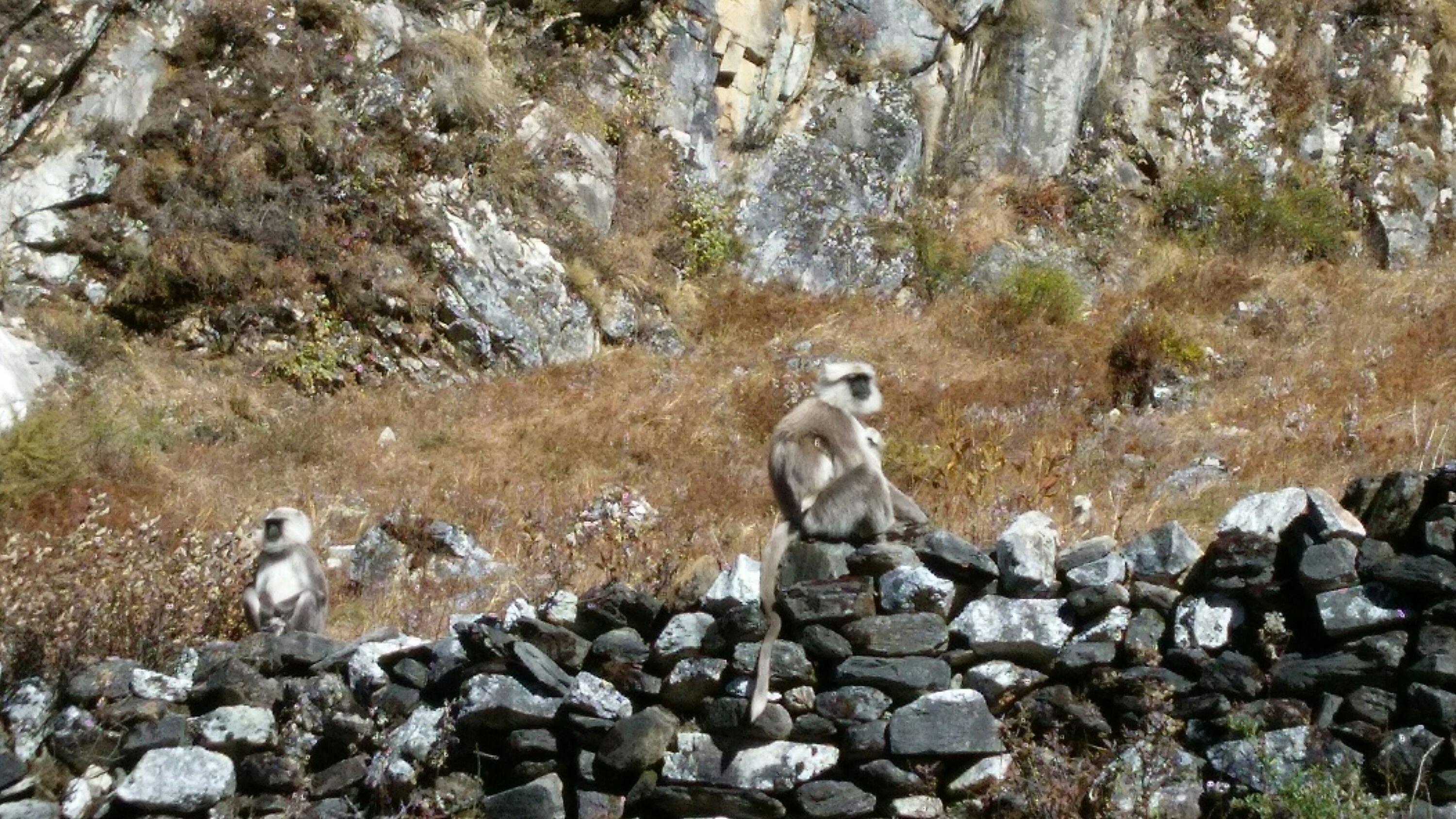
Let me start with some of the things that surprised me. Nepal is lush, more lush than I expected. Parts of it have a jungle feel particularly when there are monkeys in the trees above. Yes, monkeys. Langur monkeys to be specific. We came across a family…. no, more like a village of monkeys in the mountains. It was awesome and unexpected. Had I done research before I may have looked for them but frankly, I loved the surprise!!
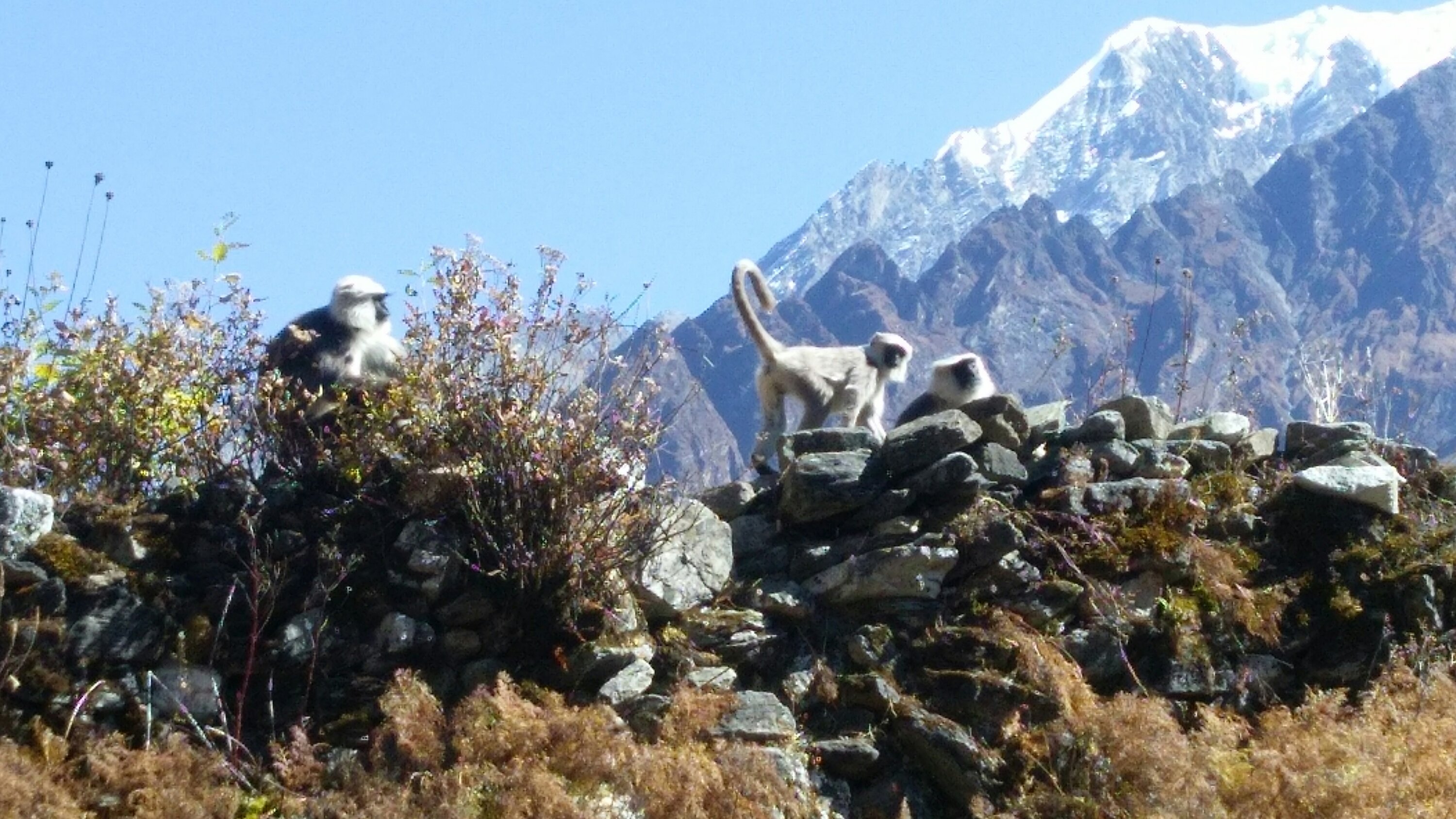
I called Nepal “cold Hawaii” at times. Beautiful falls spilling into pools of icy blue water. Bamboo, steep cliffy valleys, grassy slopes that plummet to raging river bottoms. It was stunning. I expected snow and mountains and stark scenery that swept me off my feet, I didn’t realize the lowlands were so warm, lush and green.


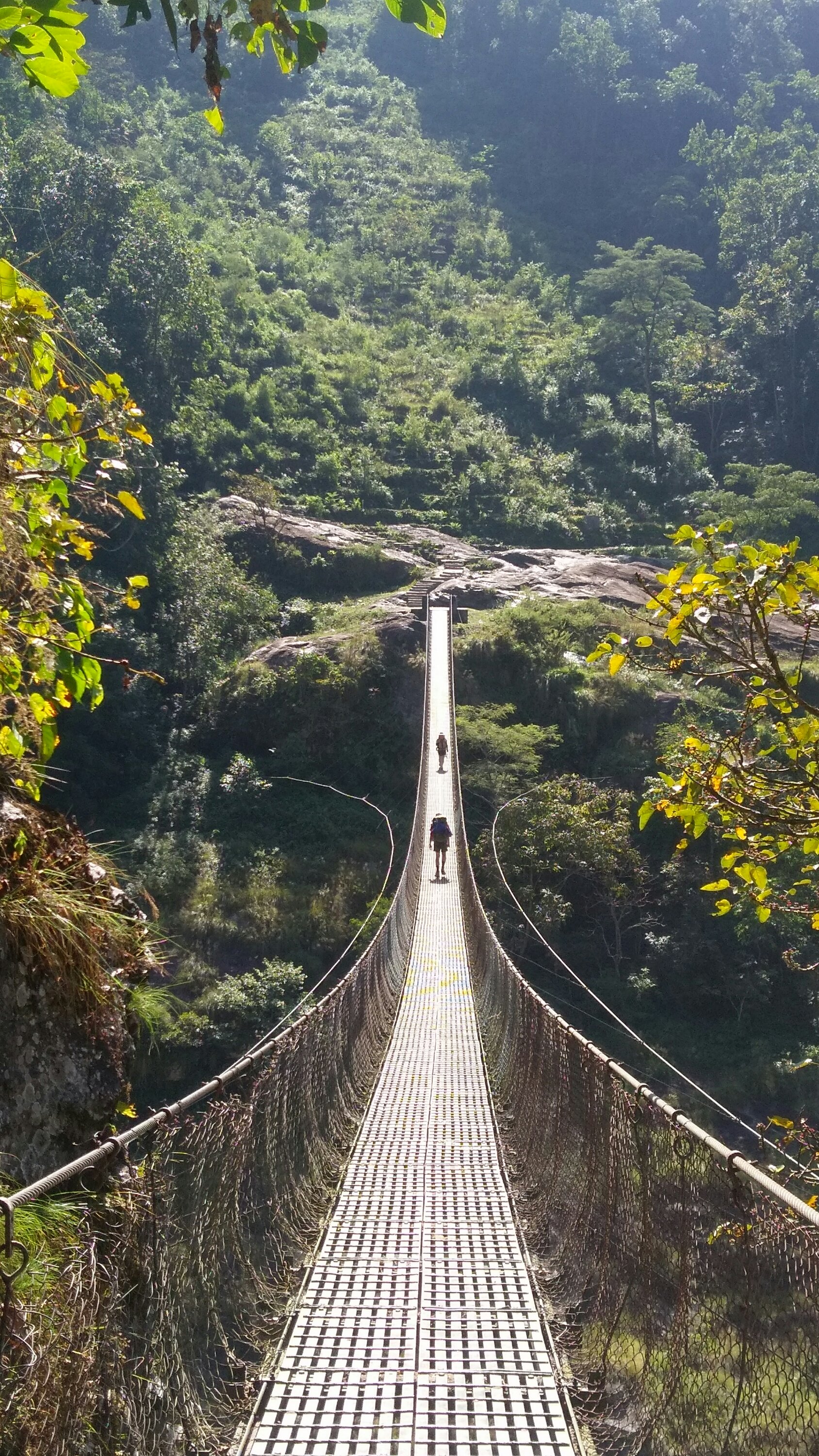

Suspension bridges are everywhere… connecting small villages to main trails. The irony; modern well built suspension bridges made with huge cables… strong enough for mules and people to cross, connecting villages where people have dirt floors, cook on dung fires and their water comes out of a plastic pipe from the nearest stream. Nepal is a country of contrasts and trekking in the mountains highlights it. Yak and donkey herders walking in bare feet or flip flops over the same rocky uneven ground I’m doing with sneakers and walking sticks. The herder is talking on a cell phone or playing Nepali music with it and I know they will walk home to their unheated house and eat dahl bhat huddled around the cook stove in the kitchen. If they have the means they may tune into the TV set with channels provided by a satellite dish, or perhaps theirs is a family with no electricity and will go to bed once the cooking embers die out. Nepal has some crazy contrasts.
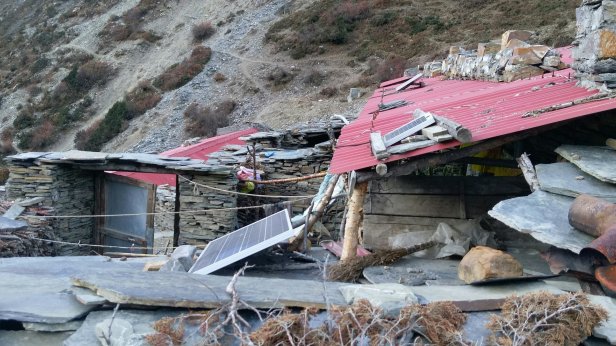
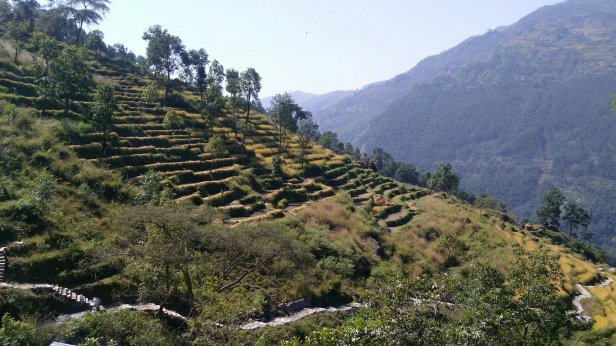
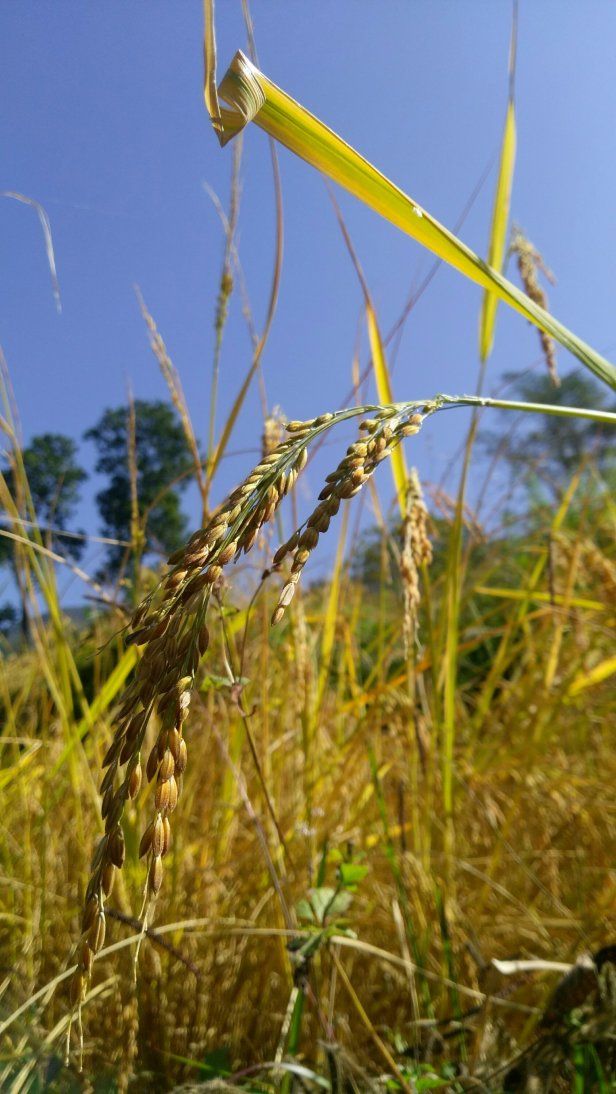
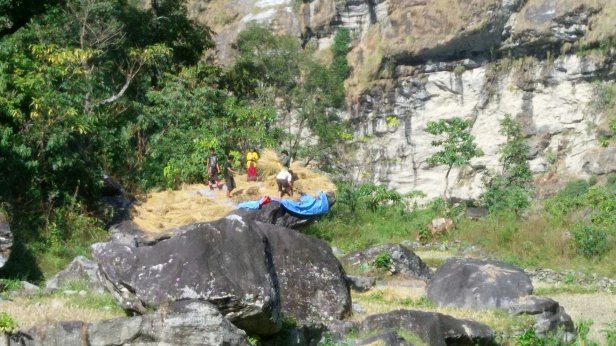
Trekking, you absorb Nepal with all your senses. The sweat from heat, the goosebumps of cold, the sounds of puja, the smell of horse dung and the visuals of people in their everyday lives. It was a walking history lesson. My first few days we trekked past people threshing their grain by hand over tarps to catch the kernels. Millet and rice in the lower valleys turn to barley and buckwheat higher up. There are the terraced mountain sides, golden in the fall before the harvest. The colors are striking to the eye: green, gold, blue and splashes of color from flowers. Did you know that pointsettias grow into trees? I didn’t. In a few villages the trail was lined with pointsettia trees in full bloom, a lovely site.


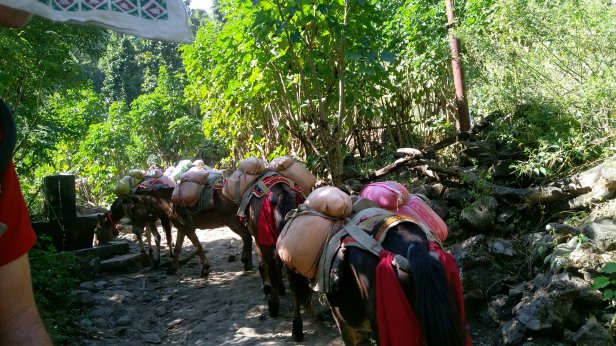
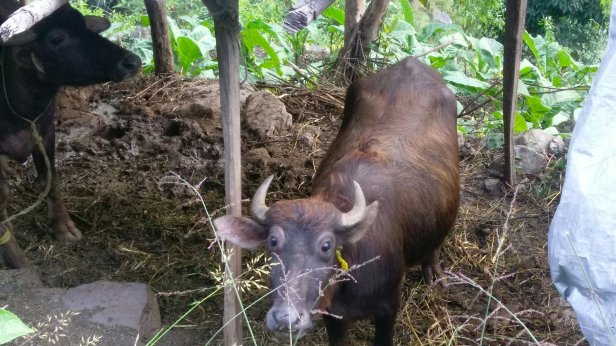
If you can’t handle the smell of horse poop, do not trek in Nepal. You share the trail with mules, donkeys, buff, cows and at higher altitudes Yaks, Naks and Zopchuks! (This is a cross between yak and buff and is a phonetic spelling). The trails wreak of animal urine, so pungent at times you can taste it. Any given day you may pass or be passed by loaded mules. In the higher valleys traffic is heavier when the Tibet border is open. Locals stock up on wares to sell in their small village stores. I’m proud to say I only stepped in fresh dung once over the course of 3 weeks… and that was enough. Really, it’s dusty and dry enough that it comes off easy. Yes, with any wind the trails send up plumes of dust to clog nose, eyes and sanity. People wear dust masks on their faces even when trekking. I saw the most in Kathmandu because the streets are so dusty there. People wear them on buses, in cars, on bikes, walking around. I see people taking selfies with their dust mask on. This is a cultural norm in these parts. Dust is part of the experience.
In November, its cold at night but HOT in the intense sun at lower elevations. I’m doing anything to cool down and still keep “appropriate dress”; roll up the pant legs and shirt sleeves , dip the head in water, unbutton the top 2 buttons of my sun shirt. Then I step into the shade and might want gloves! At night the temps drop and the single walled wood rooms or cement quarters are chilly! Up higher the water spickets freeze at night as the mercury dips below 32 degrees Fahrenheit. Daytime temps depend on the wind. Like any outdoor adventure you experience the elements first hand. As the saying goes “There is no bad weather just poor clothing choices”.


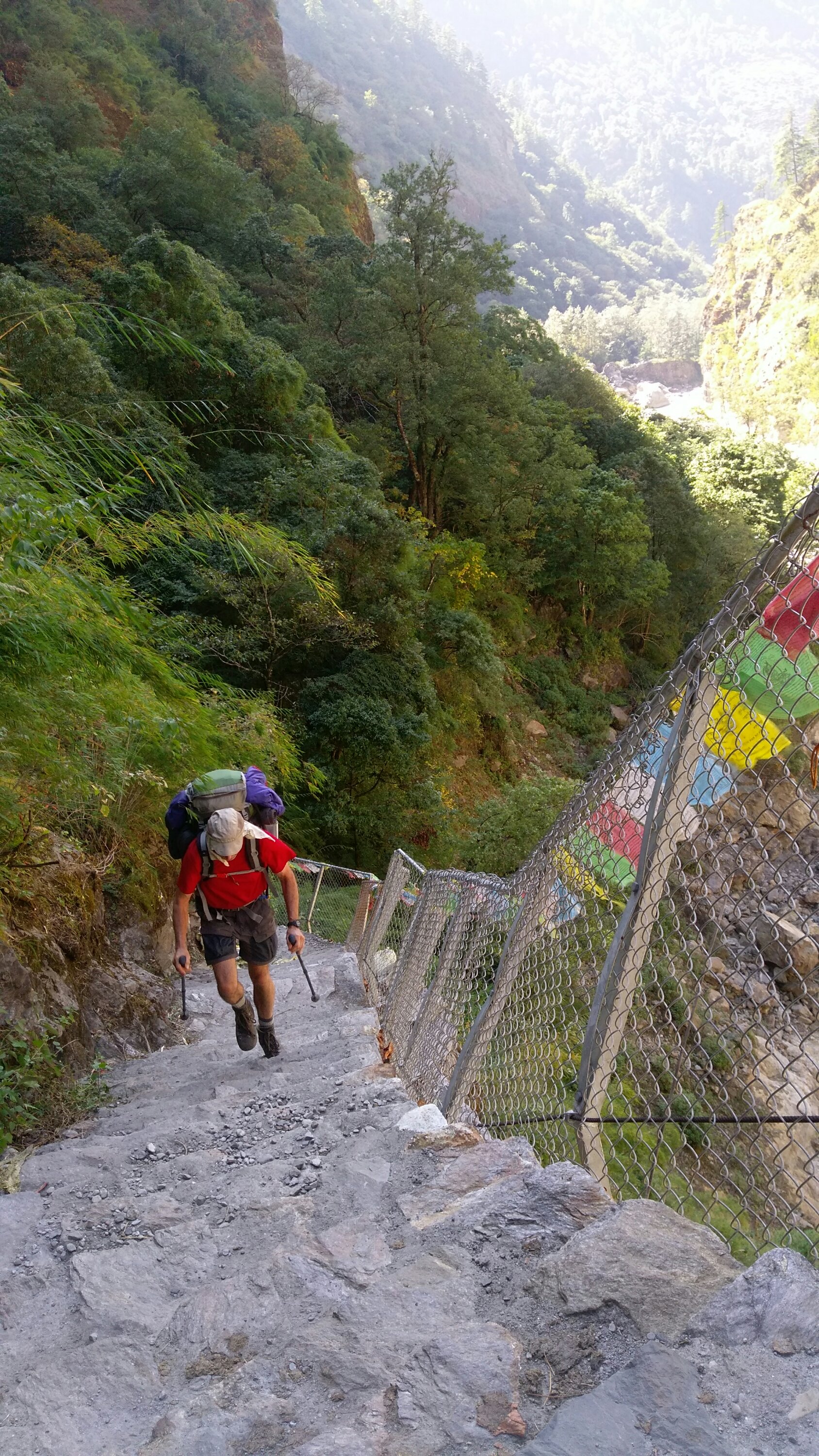
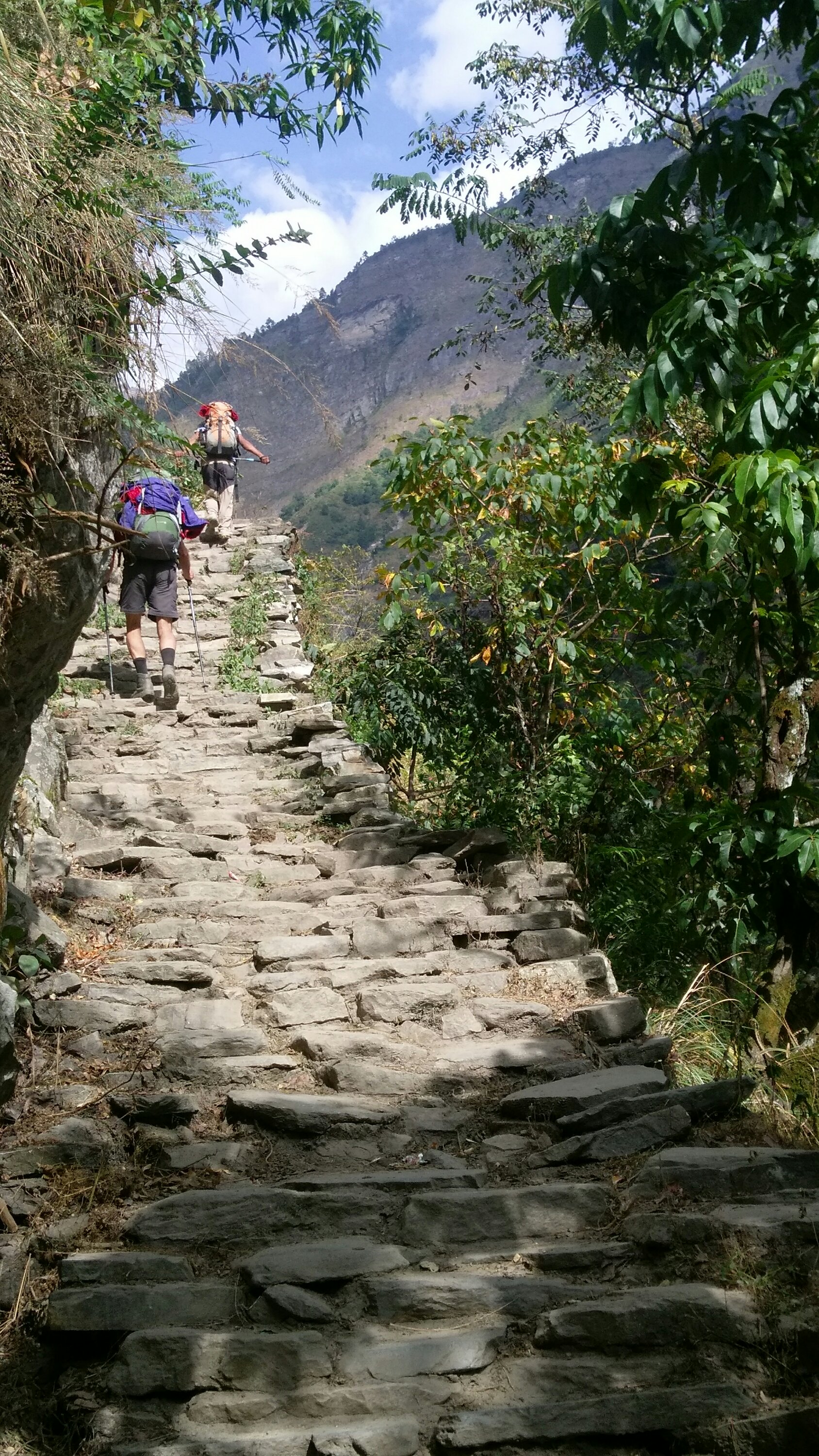
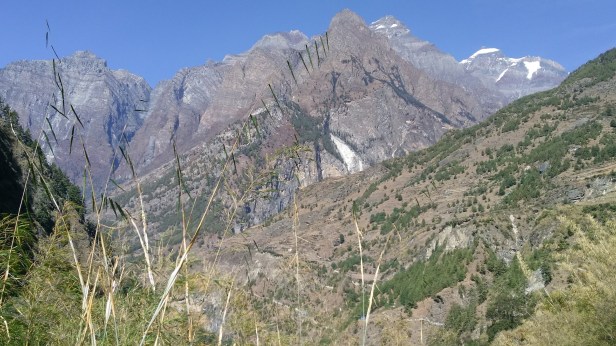
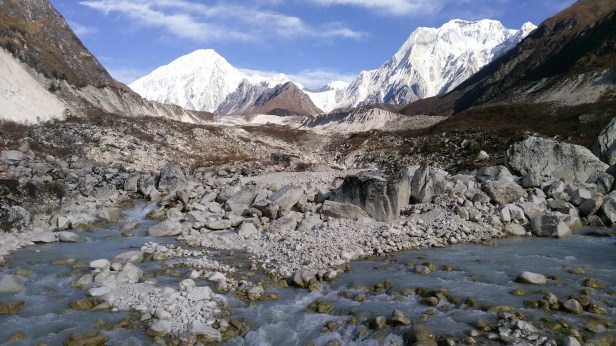
The scenery is of course fantastic and around each bend is a new vista that takes your focus off of the up hill climb. There is a term “Nepali flat”, which means even the flat areas undulate with ups and downs. When it is steep enough there are stairs: steep, uneven, stone and cement stairs. One day we descended stairs for 30 minutes! I have gratitude for the stairs because the alternative of steep packed dirt is worse.
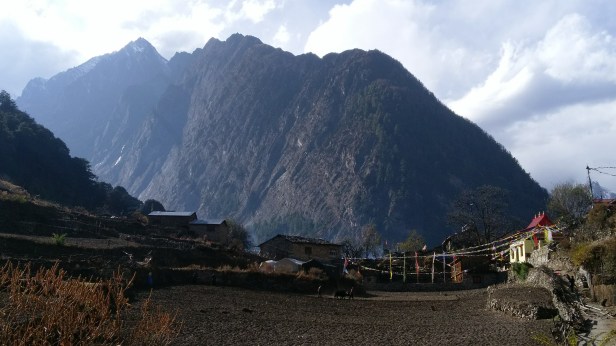
No account of Nepal is complete with out talking about Guest houses. Its a traditional element of trekking in the mountains and where most tourists stay. Historically expeditions were self sufficient hiring porters to carry the gear needed for camping (tents, stoves, food, climbing gear, etc…). As the popularity of trekking and climbing has grown it’s flourished into an industry where many Nepali’s make their livelihood. Small villages where trekkers once relied on finding a house that would put them up for the night or a field to camp in now have 2, 3 or 4 guest houses to choose from and many “shops” with the goods one might need on their way. Eating dinner and falling into bed with out having to set up a tent or light a stove is a big luxury and quite a different feel on a trip. It took me some time to adjust. While my sense of independence and competence was being challenged Mike kept reminding me this is how the local economy works and people make a living. This IS part of participating in another culture.


The experience of trekking Nepal is not limited to what I have shared here. There is plenty more to share: small details, subtle nuances, big thoughts and revelations along with funny stories as one tries on a different culture. It is for sure an opportunity to expand perceptions, excite the mind and satisfy the soul.

 Mirczak's Magical Year