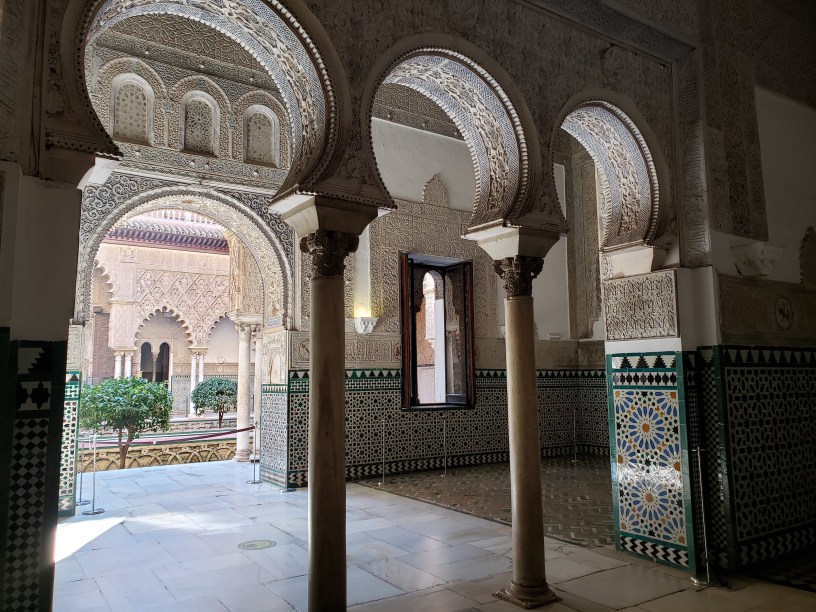
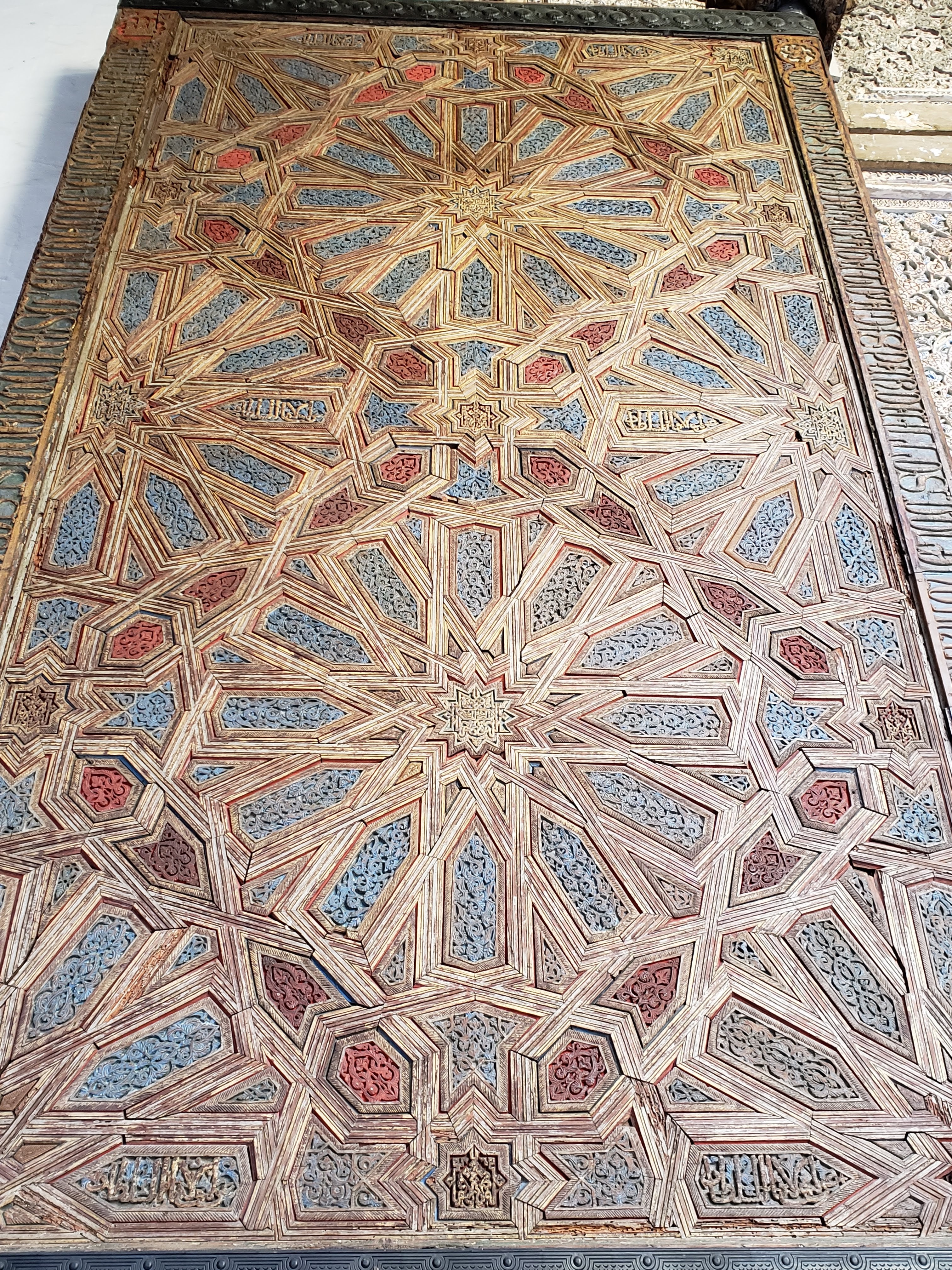
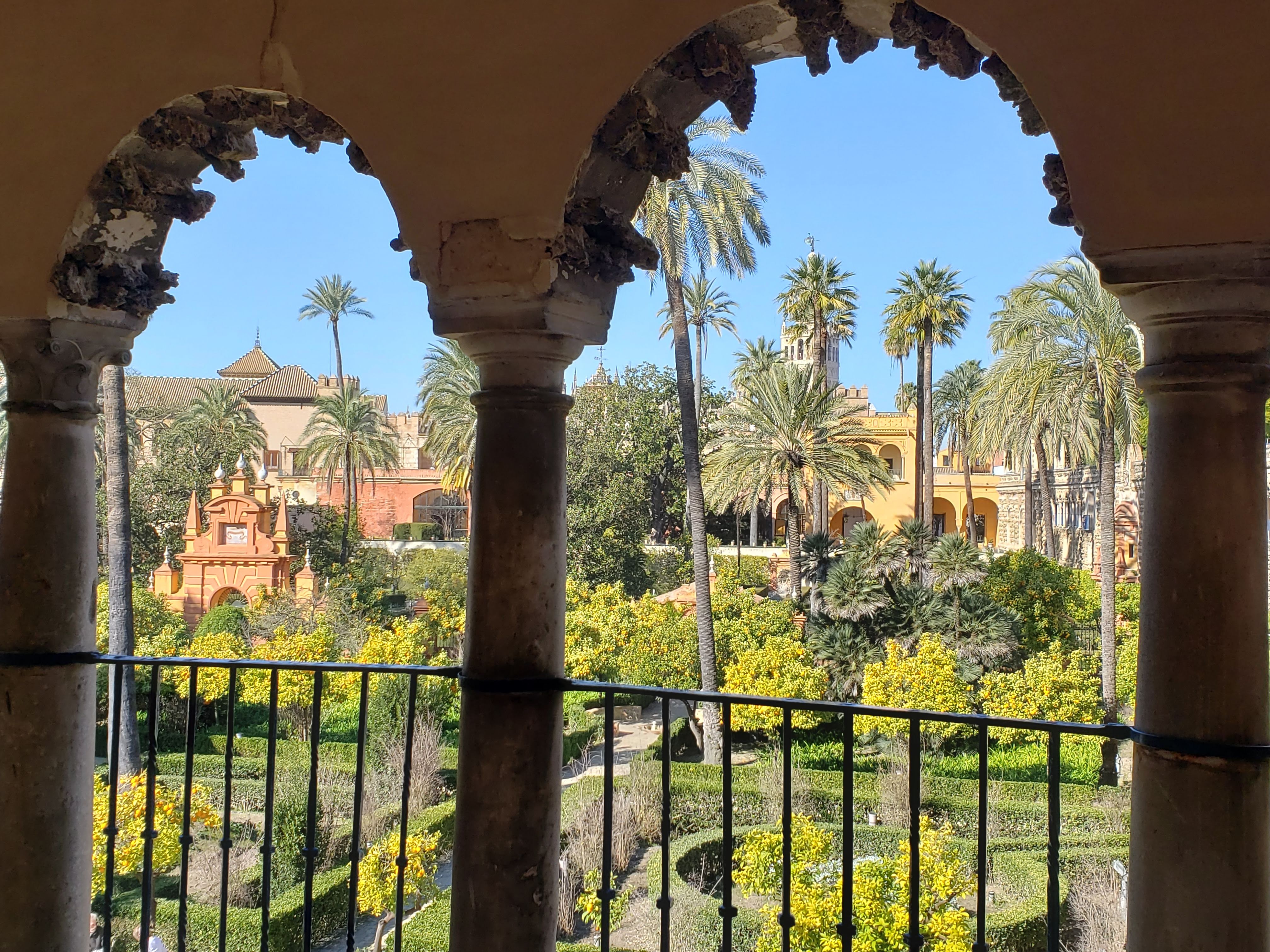
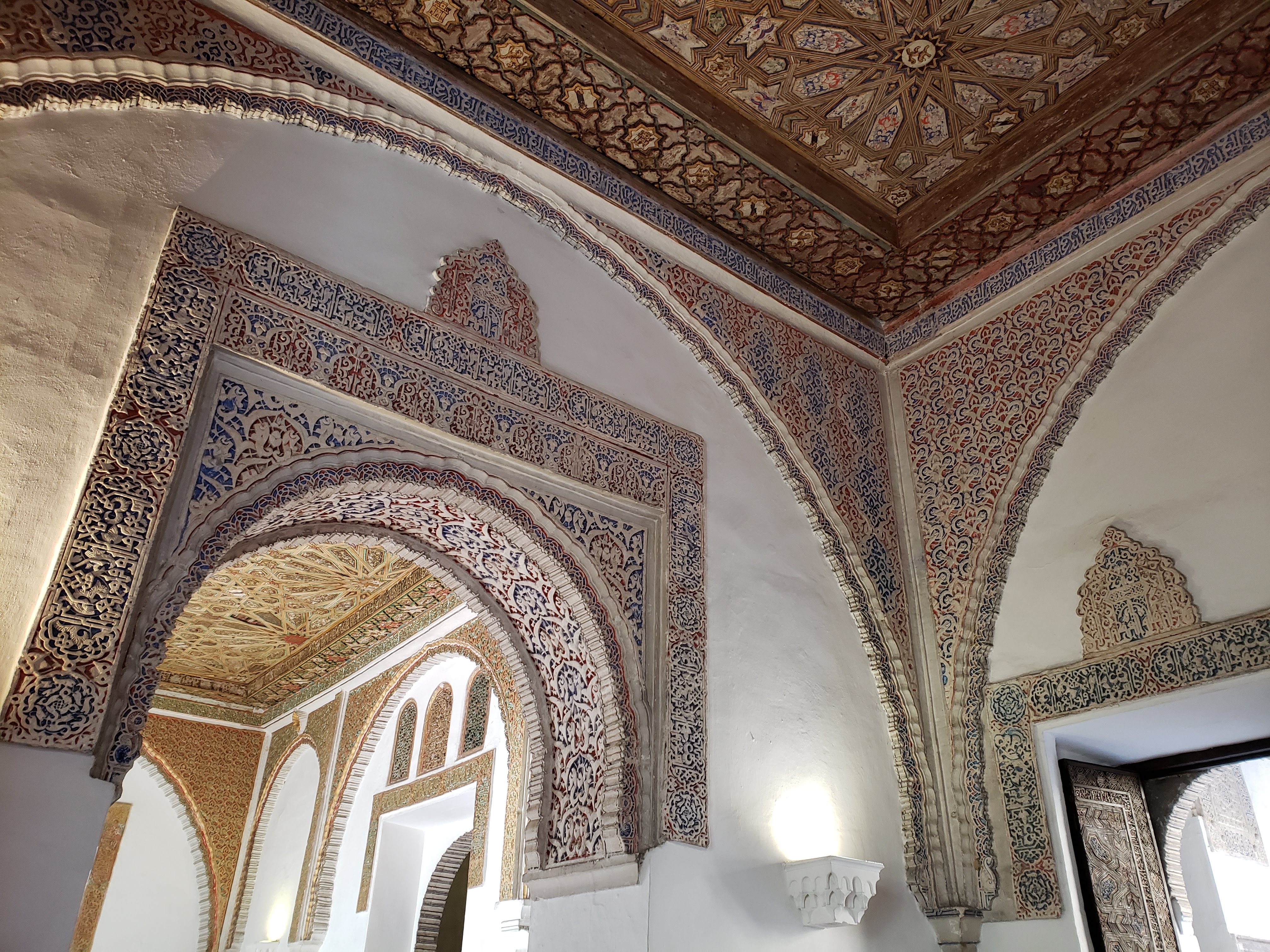
There is deep history reflected in the varied architecture of Seville. Muslims controlled the better part of Andalucia for 800 years. They brought with them Moorish architecture; the characteristic rounded archways along with geometric and arabesque designs carved of wood, stucco and tile. The Spanish christians would take control in the 13th century. I’m learning that part of conquering is to mark the territory with your religion and the buildings where one worships. This means you supplant their architecture with yours, which has created incredible displays of Gothic and Islamic architecture butting up against each other, or built over each other, depending who had control at the time. This is the case with the Real Alcazar, or Royal Palace, which was built for a Christian King on top of a Muslim Alcazar.


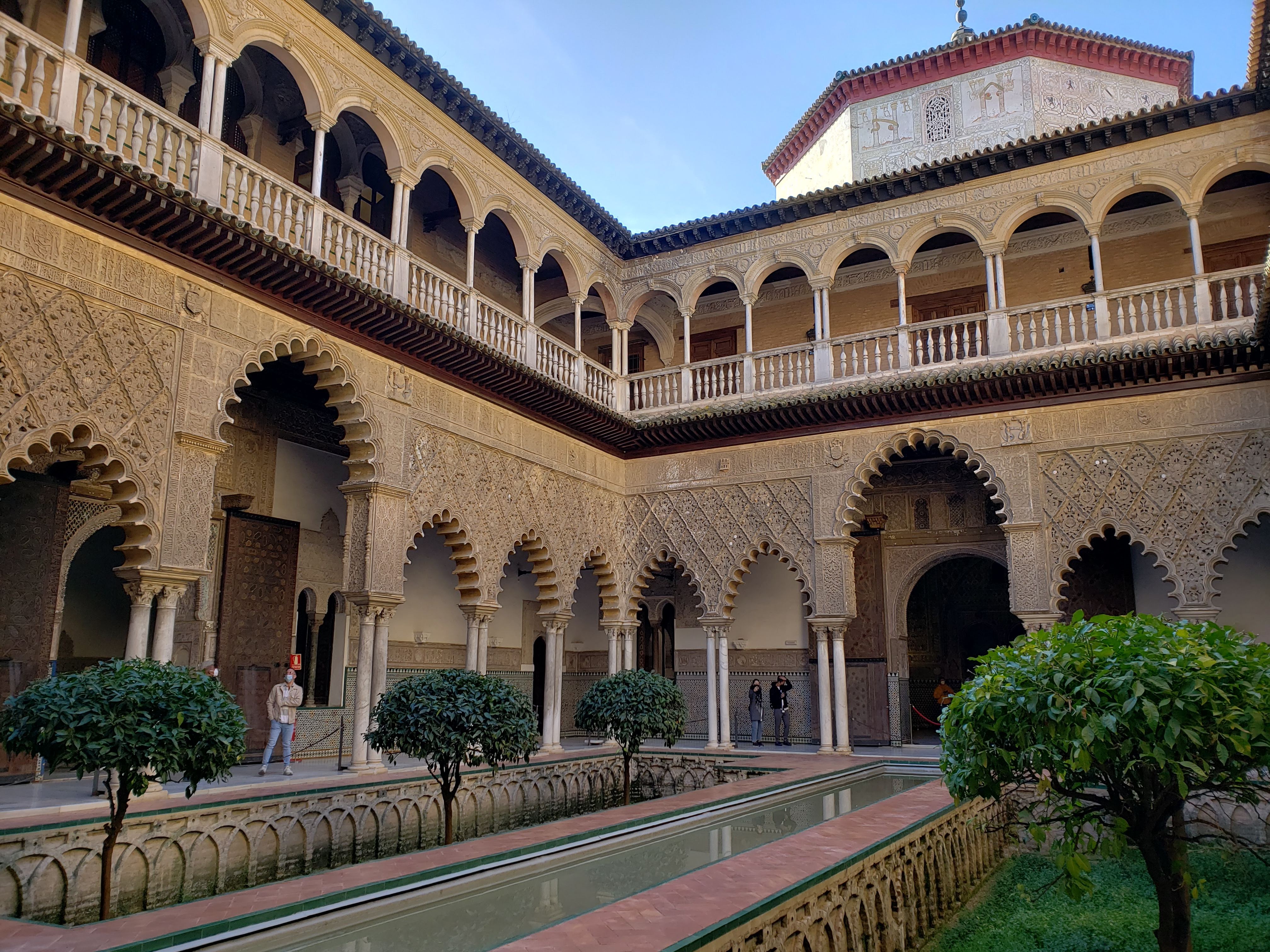


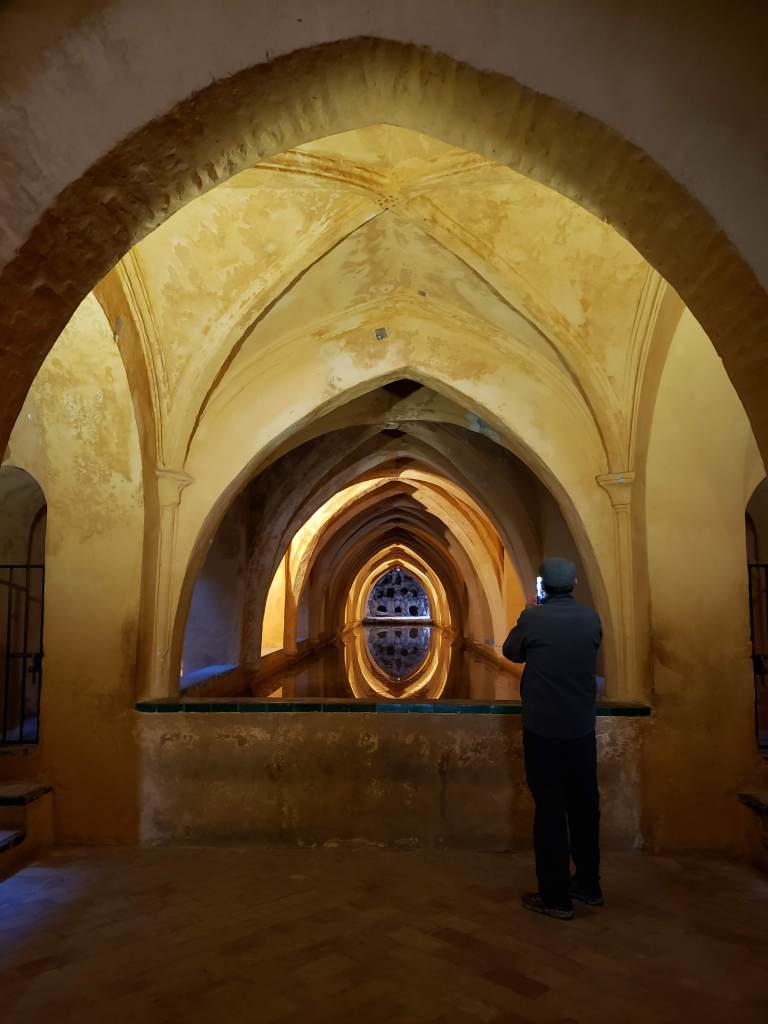
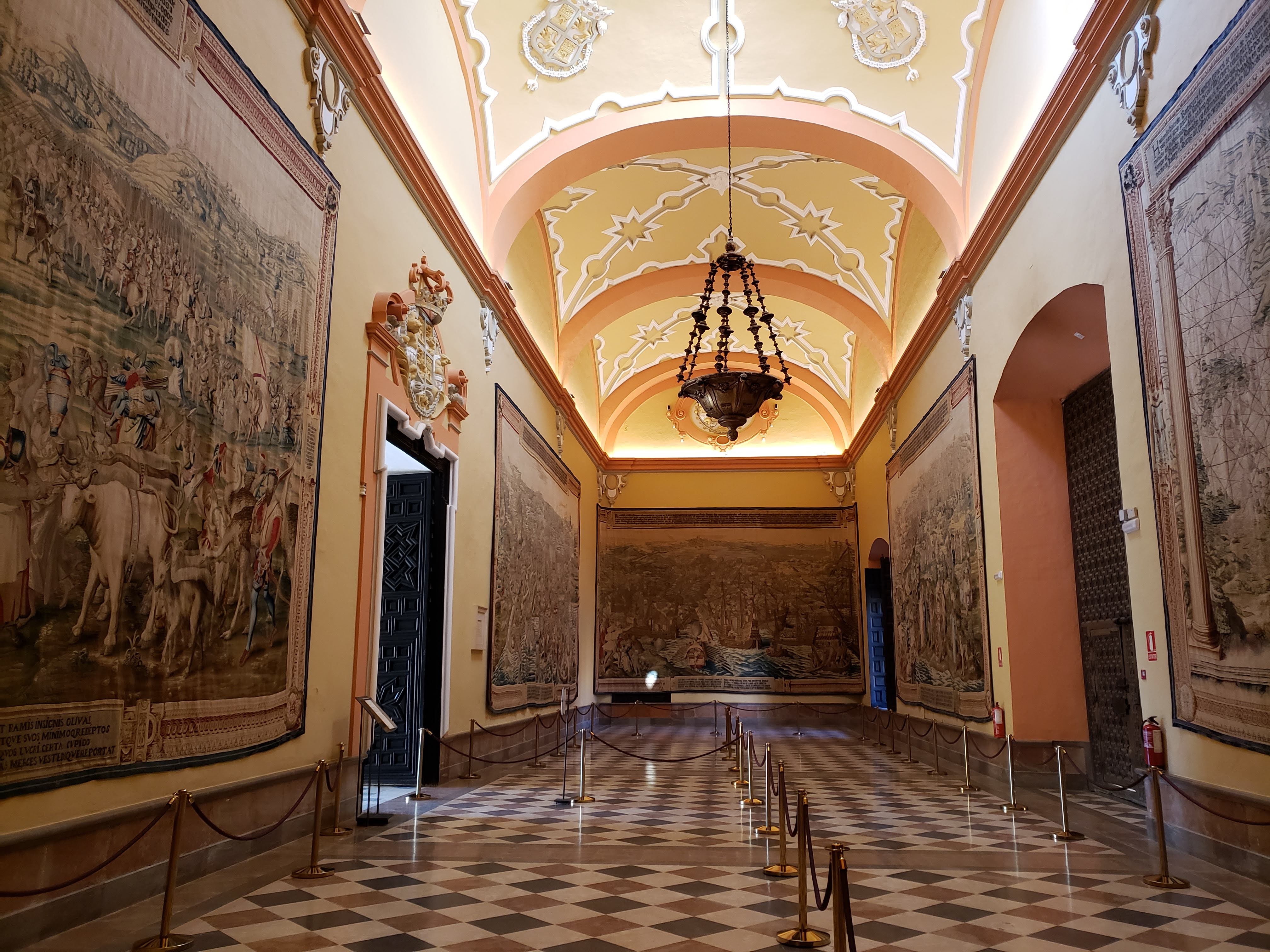
The Gothic style halls of the palace have a totally different feel. The cavernous space is punctuated by pointed arches, the defining element of Gothic architecture. I felt dwarfed within these walls and being an Alaskan, my thoughts kept returning to “how did they heat these spaces?”

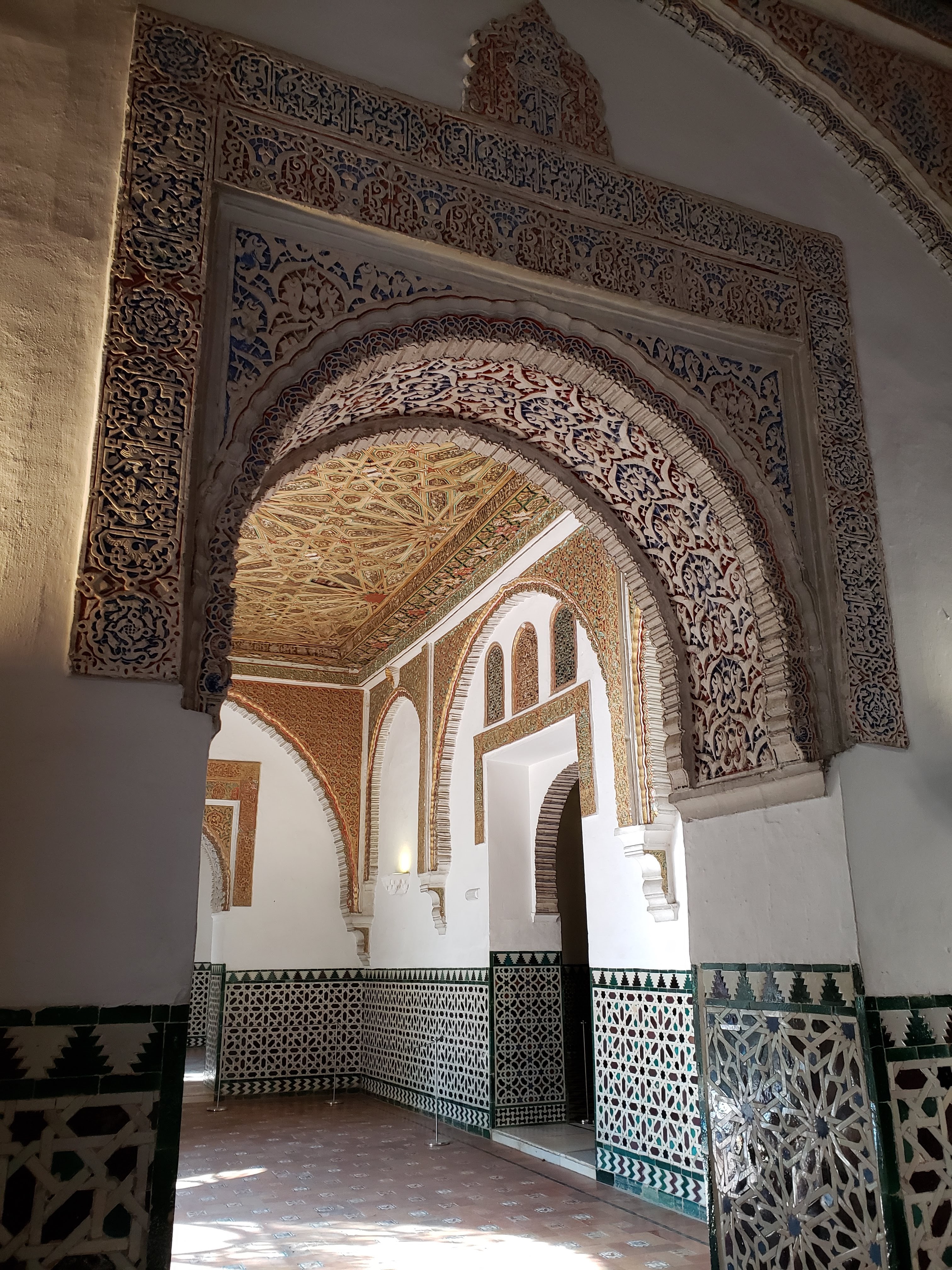
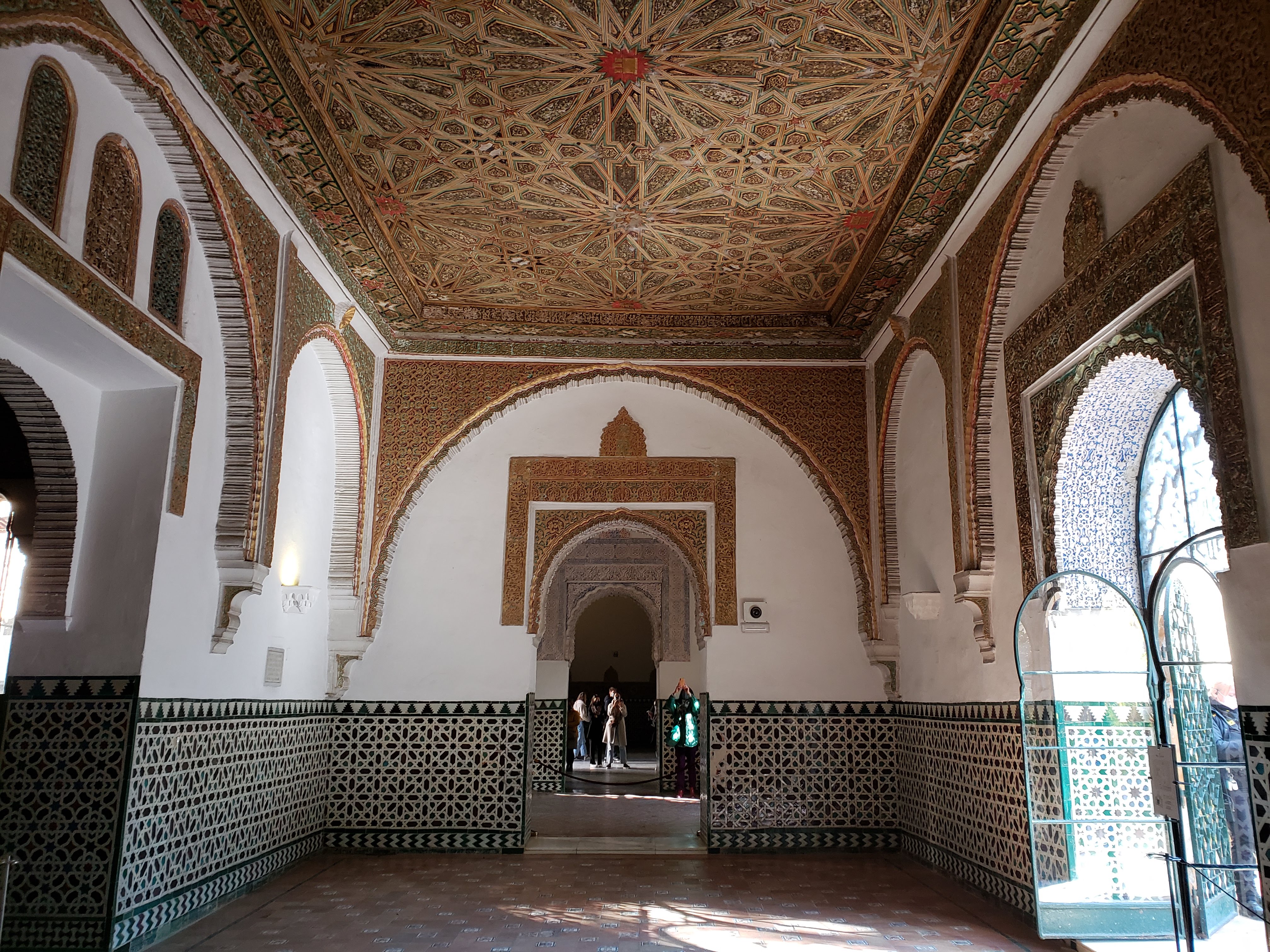
It is difficult to truly capture the opulence and beauty of the Salon de Ambassadors. One cranes their neck to take in the resplendent walls from floor to ceiling. Your eyes are not sure where to focus first, or last, as they gaze over this display of craftsmanship and wealth. I try to imagine what it was like to live inside these walls or conduct business in this room with it’s lavish display reminding everyone of your power and status.
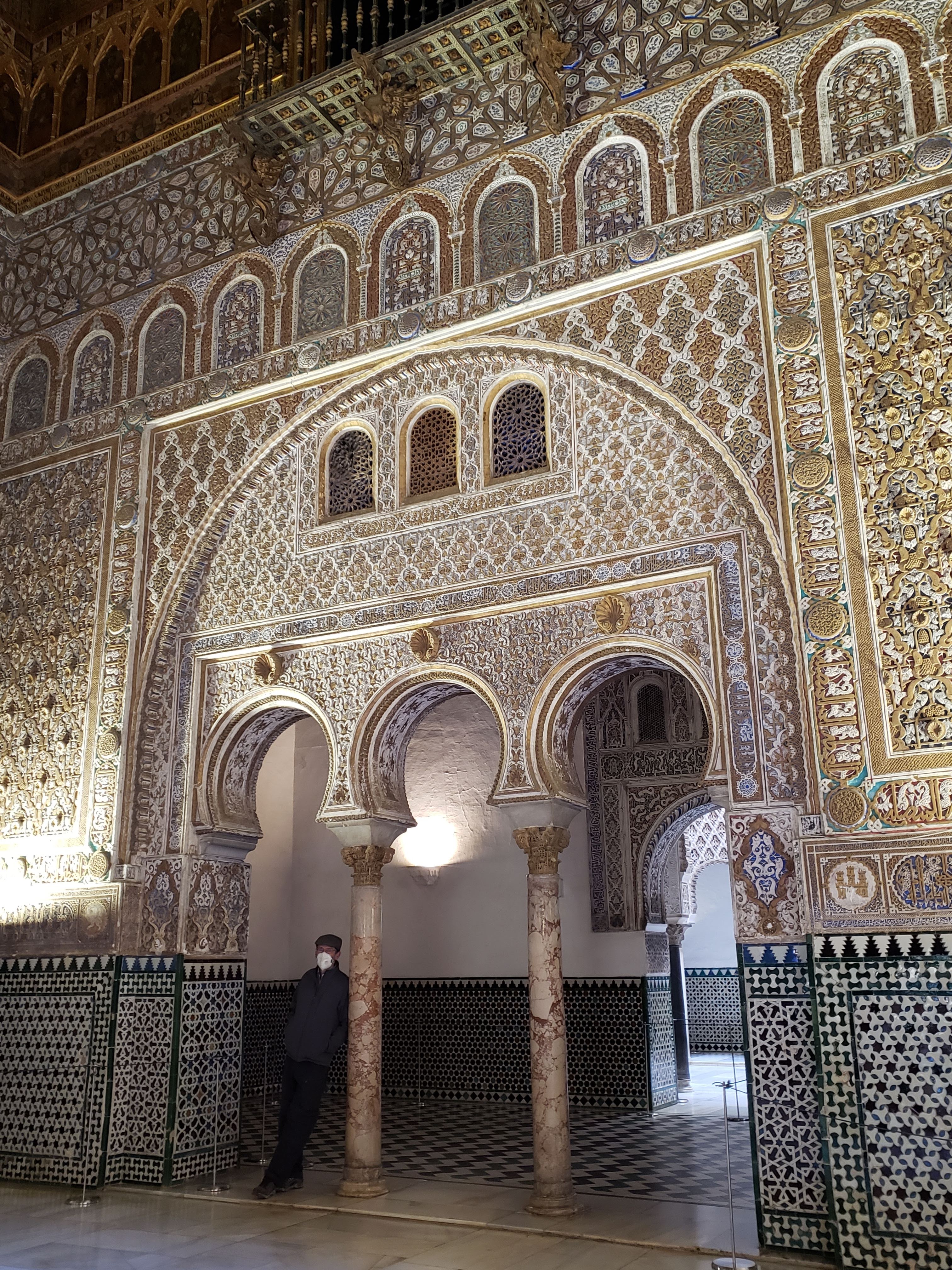
Today many places have Mudejar style or would be refered to as Neo-Mudejar. This is the ornamental decoration derived from Islamic roots. The term Mudjedars refered to muslims who stayed in Andalucia after the reconquest (the Christian takeover in the middle ages) but were not initially converted to christianity or exiled. Their decorative style was added to churches, palaces and other buildings blending with Gothic and Romaneque. This can be seen in many areas of Spain.
 Mirczak's Magical Year